By. Brandon Lang
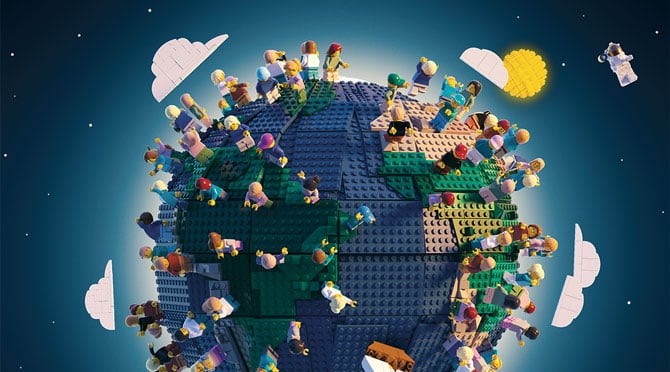
I don’t think it’s controversial to say that worldbuilding is extremely important when it comes to storytelling. It is within these little worlds where the lives of the characters exist, the world shapes them and they shape the world through their reactions to the world. It is also in these worlds that the audience immerses themselves, becoming attached to the world itself, its inhabitants, and the stories that arise from it. But worldbuilding is bloody difficult.
Worldbuilding is an intimidating and exhausting process that can take months or even years.
So the purpose of this post is to present two forms of worldbuilding so that despite the daunting task of it, at least you’ll have somewhere to start so you can at least start writing down ideas.
Hard and Soft Worldbuilding
You might have heard of these two forms of worldbuilding before, but for those who haven’t lets start with some quick definitions.
Hard Worldbuilding
In my opinion, the most well-known form of hard worldbuilding is JRR Tolkien’s The Lord of the Rings. When Tolkien created Middle-Earth, he developed the Elvish language with a whole alphabet, phonetics, grammar, and its own syntax. The Silmarillion reads more like a history textbook than a fiction piece as it goes through the creation story of Middle-Earth and the historical events of the first and second ages. He developed the complex and detailed history, cultures, and people of the men of Rohan and Gondor. All three books detail the world that the reader is visiting. As the reader follows the characters on their adventure to save Middle Earth, we learn the history of Middle Earth through the text.
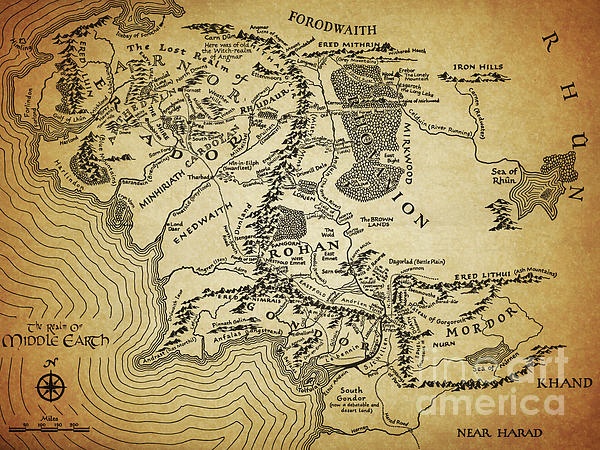
A more modern example of hard worldbuilding is Game of Thrones, by George R.R. Martin where the history of Westeros is developed in complex details.
It is in these details that the readers are most immersed in the world. Hard worldbuilding is about immersing readers by giving them detailed, logical, and even realistic cultures and histories, and giving the reader a reason for how they all work together. This makes the world feel real, possibly as real as our world since it’s easier to visualize the world.
Soft Worldbuilding
When I think about good examples of soft worldbuilding, the first creator that comes to mind is Hayao Miyazaki. You might not recognize the name, but you have heard of his work. He is the mind behind Spirited Away, My Neighbor Totoro, and The Boy and the Heron, and one of the founders of Studio Ghibli. I would argue that most of the worlds created through Studio Ghibli are created with soft worldbuilding in mind.
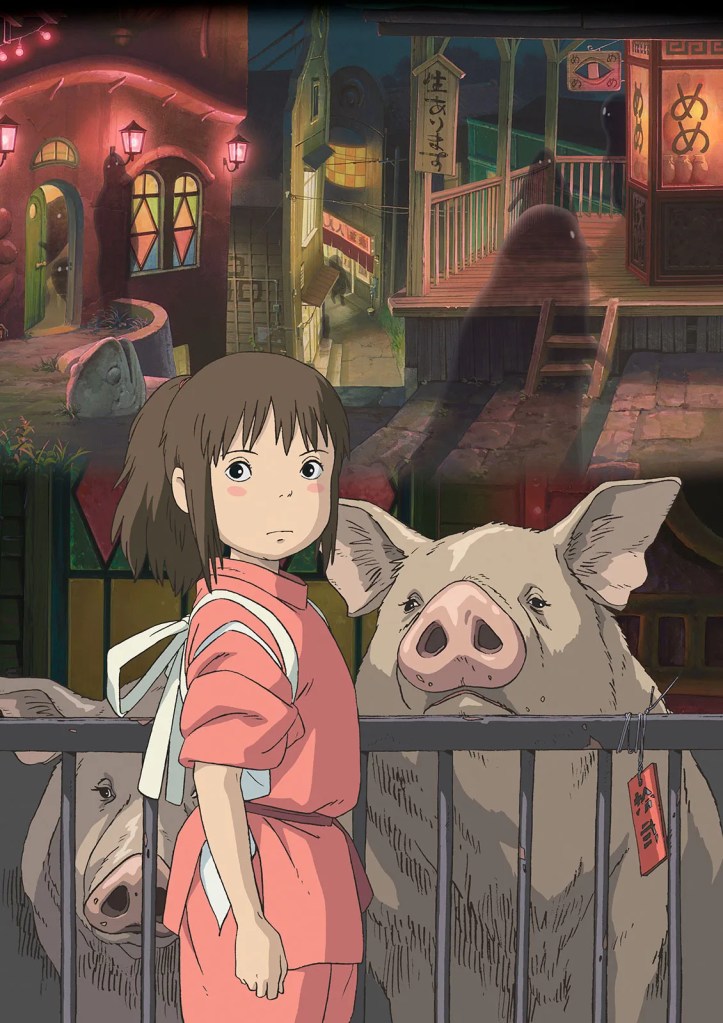
Lets just look at Spirited Away as an example of soft worldbuilding. The world that Chihiro is pulled into, oh… if you haven’t seen Spirited Away, just go watch it, right now. Stop reading this and watch the movie. Ok, for those who have completed the homework and seen the movie already, we can continue.
The world that Chihiro is pulled into is never explained to us. We learn about the world as we observe Chihiro interacting with it. Nothing is clear on how things work, we as viewers can only assume and develop our own conclusion. We are given no logic to rationalize everything we see. This is because soft worldbuilding doesn’t rely on logic to immerse the audience into the world.
In 2002, during an interview for Midnight Eye, Hayao Miyazaki said the following when told that the film and story of Spirited Away feels like it can be taken “anywhere you wish, independent of logic, even.”:
‘Everbody can make a film with logic. But my way is to not use logic… At a certain moment in that process, the lid is opened and very different ideas and visions are liberated… I [should not] handle a scene in a certain way for the sake of the audience. For instance, what for me constitues the end of the film, is the scene in which Chihiro takes the train all by herself… I remember the first time I tookthe train alone and what my feeling were at the time. To bring those feelings across on the scene, it was important to not have a view through the window of the train, like mountains or a forest… because they are so focused on the ride itself. It’s while working on that scene that I realised that I work in a non-consious way. There are more profound things than simply logic that guide the creation of the story’
What makes the worlds that Miyazaki creates so enchanting is that they don’t focus on explaining how the world works but emphasize how the world is seen through the characters existing in it. Worldbuilding like this allows the exploration of themes and emotional threads behind stories. Soft worldbuilding makes stories more immersive by prioritizing atmosphere and character feelings over the concrete rules that establish the world.
The million dollar question!
So which one should you use?
Which one is the better method when it comes to worldbuilding?
Well, here’s the answer that I’m sure everyone will love: both, you should use both when it comes to worldbuilding.
The trick is to know how much of each you should use for your world. How much mystery and wonder would you include to tease the reader’s imagination compared to how much explaining of the world you need to do. I don’t have that answer for you, because I don’t know the world you are trying to build.
What I like to do is start off with hard worldbuilding that turns into soft worldbuilding. Start off with a single location a town, city, or whatever. The important thing is that it is where the main characters will begin their journey or spend the most time. Developing this location with hard worldbuilding will ground the reader in the world, as it will help them understand the basics of the world. Then as you create the world from the “starting location”, involve more soft worldbuilding techniques the further away you get from the “starting location”.
Meaning that you only have to develop rules and logic for a single location while making a world of mystery and wonder surrounding it. This also allows the reader to discover the world alongside the protagonist.
Ultimately there is no correct method of worldbuilding as long as you finish with a world that you are proud of. Hopefully, this post helps you begin the first steps into worldbuilding.
 The Bolo Tie Collective